Why You Get Ice Dams in Northern Michigan (and How to Stop Them at the Attic)
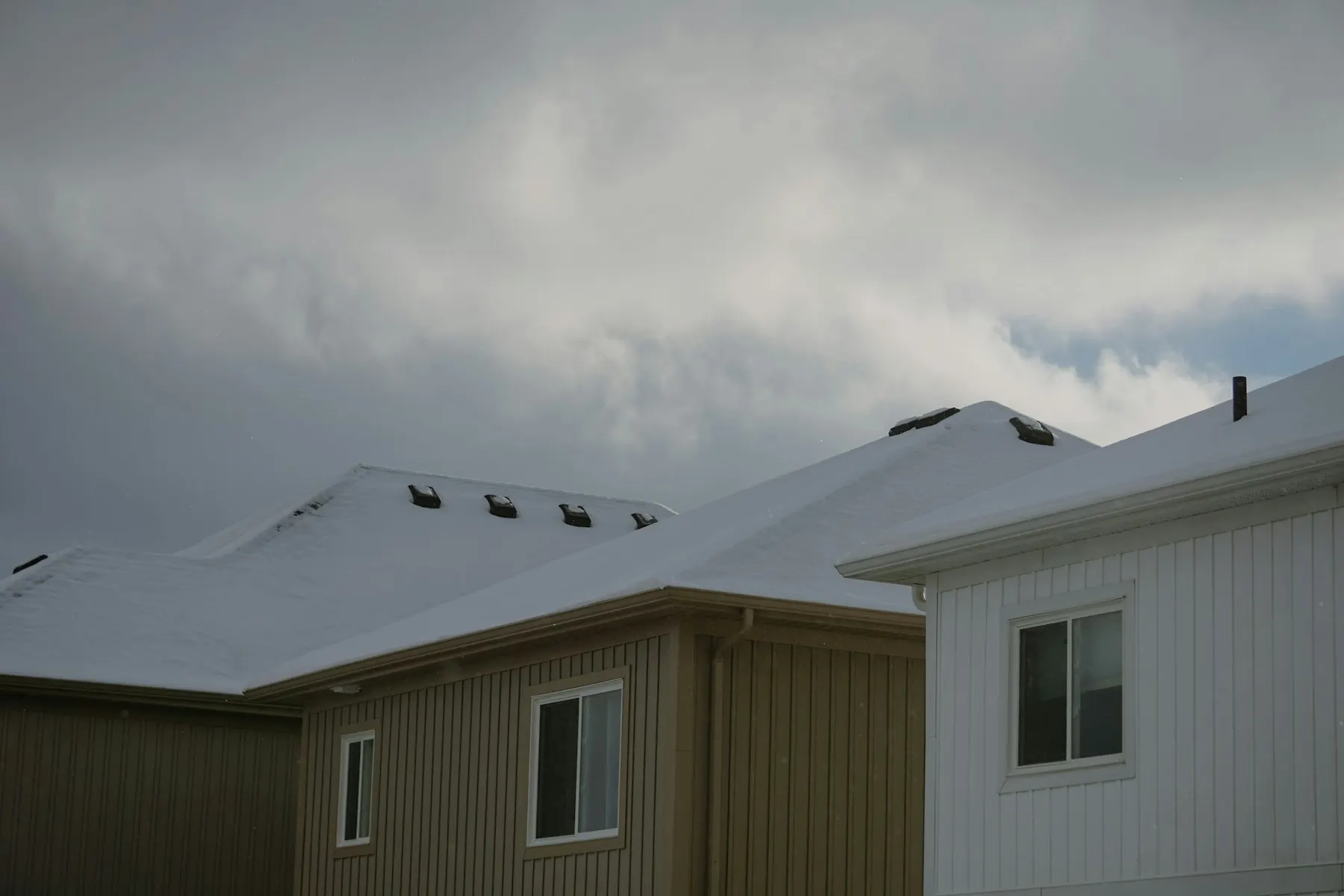
Drive around Traverse City after a good snowfall and you can pick out the houses with an attic problem. Some roofs hold an even blanket of snow for days. Others melt bare along the top, and a week later there is a row of icicles hanging off the gutters. Those icicles are the start of an ice dam.
What an Ice Dam Is
An ice dam is a ridge of ice that builds along the bottom edge of your roof. Snow higher up melts, the water runs down the roof, and when it reaches the cold edge over the gutters it freezes again. Each round of melting adds to the ridge, and eventually water backs up behind it with nowhere to go.
That trapped water can work its way under the shingles. That is how people end up with stained ceilings, wet insulation and damaged drywall along the outside walls, usually right after a thaw.
Why It Happens: Heat in the Attic
Snow on your roof melts because the roof is warm. The roof is warm because heat from the house is getting into the attic. On a lot of older Northern Michigan homes, two things are working against you:
- Thin attic insulation. Many homes up here were built with far less insulation than a lake-effect winter calls for, and what is there has settled over the years.
- Air leaks into the attic. Warm air rises through gaps around light fixtures, plumbing and wiring holes, chimneys and the attic hatch.
Add a bigger, modern furnace pushing more heat into the house, and the attic warms up every time it runs. The roof follows.
Why Roof Fixes Alone Don’t Solve It
Raking snow off the roof, chipping ice and running heat cables along the edge can all help in the moment. None of them stop the heat that is causing the melting. As long as the attic is warm, the ice keeps coming back.
The Fix: Keep the Heat in the House
The lasting fix happens in the attic:
- Air seal the attic floor. Close up the gaps where warm air rises into the attic. See air sealing.
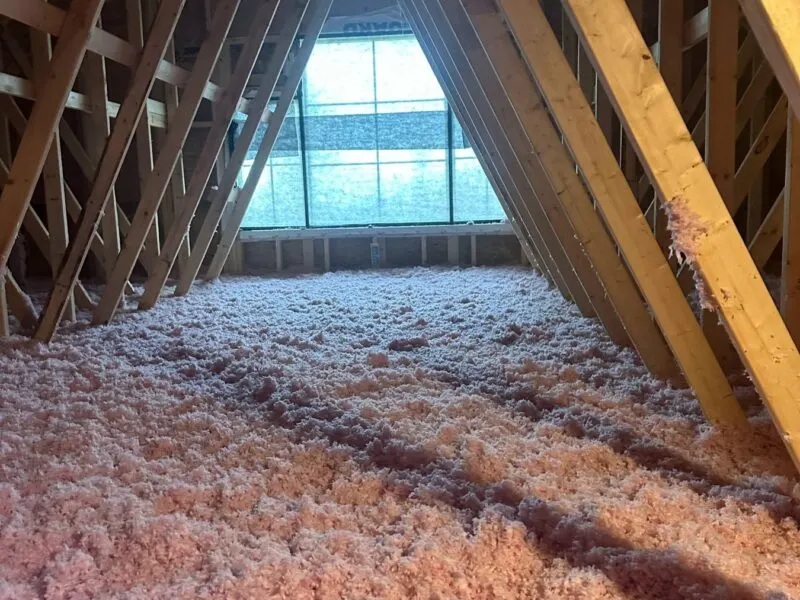
- Add insulation. A blowover adds blown-in insulation on top of what is already there, so the heat stays down in the living space.
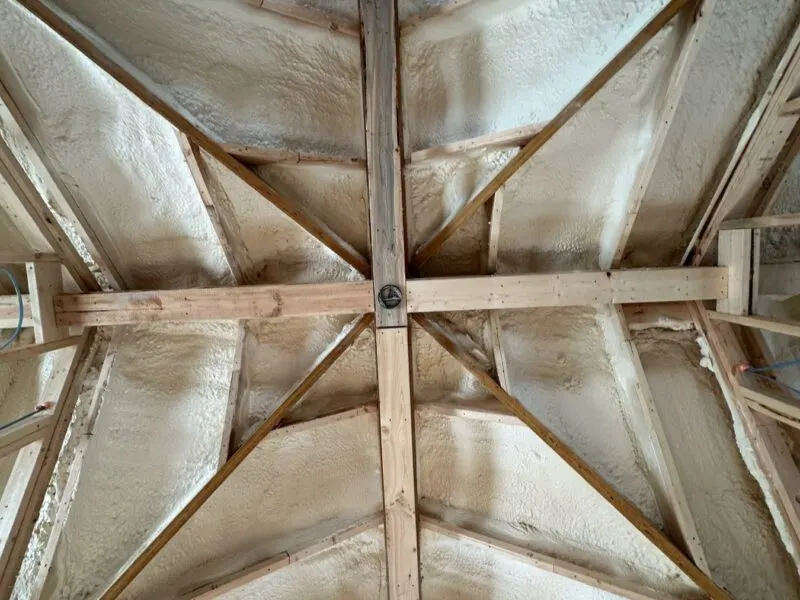
- Replace what is ruined. If past ice dams soaked the old insulation, it may need to come out first. See insulation removal.
With a cold attic, the roof stays cold too. The snow sits evenly and melts with the weather instead of from underneath.
Signs Your Attic Is the Problem
- Big icicles along the gutters every winter
- Bare patches on a snowy roof while the neighbors stay white
- Water stains on ceilings near outside walls after a thaw
- Upstairs rooms that are hot all summer
If two or more of those sound familiar, it is worth having someone look at the attic. More on this on our ice dam prevention page.
Tired of icicles and stained ceilings? Call or text (231) 357-3227 or get a quote.
Frequently Asked Questions
Can attic work be done in the winter?
In most cases, yes. A lot of attic insulation and air sealing work happens from inside the attic, so snow on the roof doesn’t stop it.
Are heat cables a bad idea?
They can help keep a channel open at the roof edge, but they don’t stop the heat that causes ice dams. Fixing the attic deals with the cause.
Is adding insulation enough?
Often it is, especially paired with air sealing. If the old insulation is wet or damaged, it may need to come out first.
How do I get someone to look at my attic?
Call or text (231) 357-3227 with your town and what you are seeing. Photos of the roof or the attic help.
Ready for a Warmer House?
Call or text and tell us what you are dealing with. Jonathan will get back to you, usually the same day.