
Spray Foam vs. Fiberglass: Which Insulation Fits Your Northern Michigan Project?
One of the most common questions we get from homeowners and builders is whether to go with spray foam or fiberglass. There isn’t one right answer for every house. Each does a different job well, and a lot of homes end up with both in different places.
How Fiberglass Works
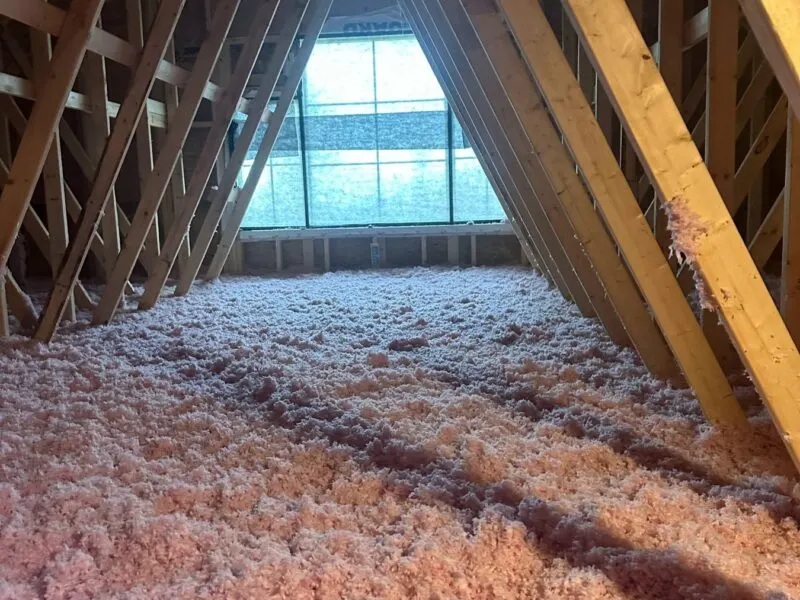
Fiberglass comes in two main forms: batts (the pre-cut blankets that fit between studs and joists) and loose-fill (blown in with a machine). It slows heat down by trapping air in the fibers.
It is a proven, budget-friendly choice for open wall cavities in new construction, for attic floors, and for topping up existing attic insulation with a blowover. On its own it doesn’t stop air from moving, which is why air sealing matters with it.
How Spray Foam Works
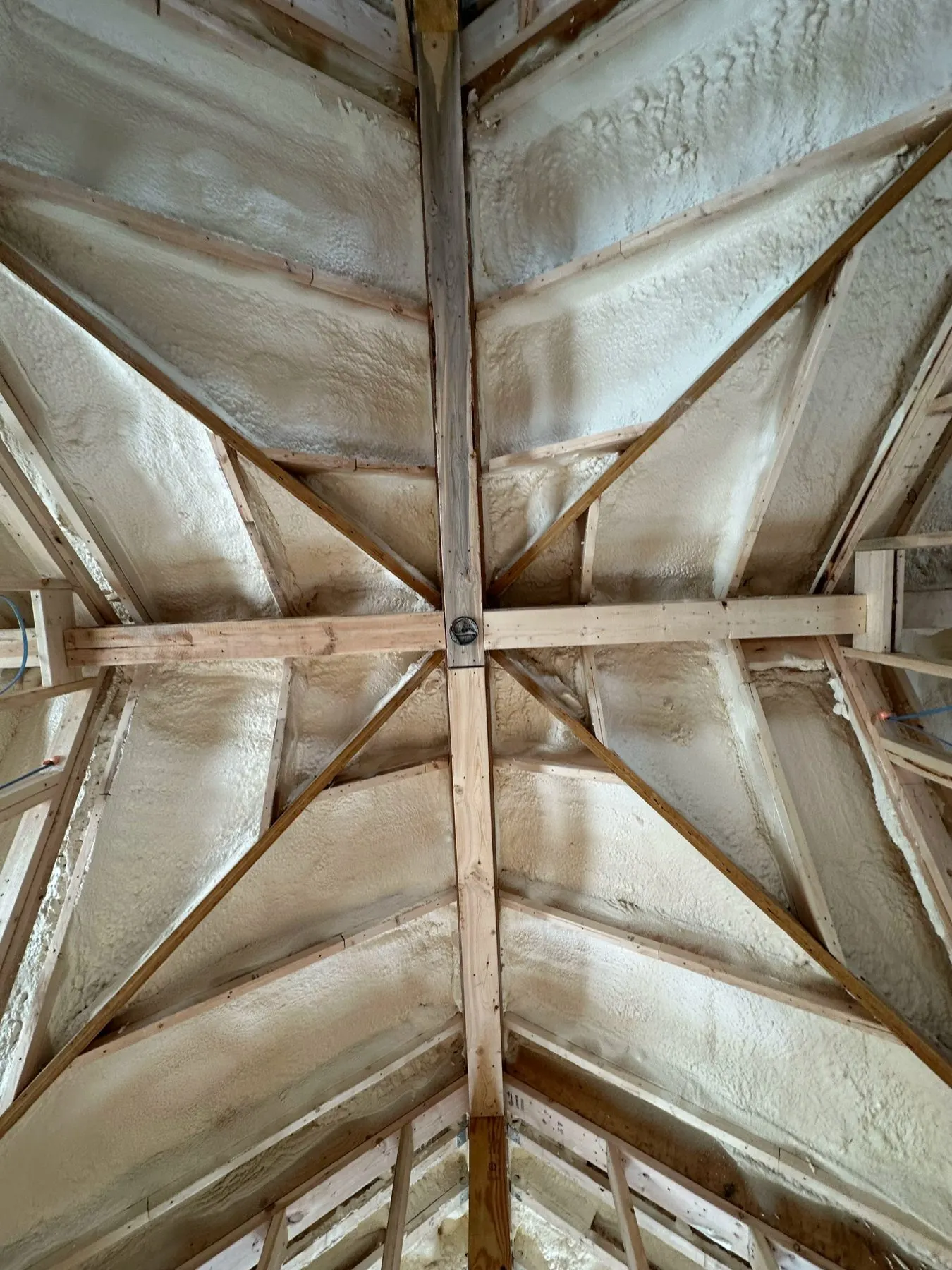
Spray foam is sprayed on as a liquid and expands into place. It insulates and seals in one pass, filling cracks, gaps and odd framing that batts can’t fill well. Because it stops air movement, it deals with drafts and air leaks as well as heat.
It generally costs more per square foot, so it makes the most sense where sealing the air matters as much as insulating.
Where Each One Usually Makes Sense
| Spot in the house | Often a good fit |
|---|---|
| Existing attic floor | Blown-in fiberglass (blowover) plus air sealing |
| Open walls in a new build or remodel | Fiberglass batts or spray foam, depending on budget and goals |
| Rim joists | Spray foam, since it seals and insulates at once |
| Cathedral ceilings and tight framing | Spray foam |
| Interior walls for sound | Fiberglass batts |
| Pole barns and commercial buildings | Spray foam |
Questions to Ask Before You Choose
- Is it new construction or an existing home? Open walls give you more options.
- Is the problem heat, drafts or both? Drafts point toward sealing, which spray foam does well.
- What is the budget for this part of the house? Fiberglass usually stretches further.
- Is it a tricky space? Odd framing, rim joists and cathedral ceilings favor spray foam.
We Install Both
Because we install spray foam, blown-in and batts, we don’t have a reason to push one over the other. We will tell you what makes sense for each part of the house or build. Builders, see new construction insulation.
Not sure which one you need? Call or text (231) 357-3227 or get a quote.
Frequently Asked Questions
Is spray foam always better?
No. It is great where air sealing matters, like rim joists and tight framing. For a lot of attic floors and open walls, fiberglass does the job well for less.
Can I mix spray foam and fiberglass in one house?
Yes, and many homes do. Spray foam on rim joists and tricky spots, fiberglass in open walls and attic floors.
Do you do spray foam on new builds?
Yes, along with blown-in, batts and sound insulation for local builders.
How do I figure out what my project needs?
Call or text (231) 357-3227 with what you are working on. Photos or plans help.
Ready for a Warmer House?
Call or text and tell us what you are dealing with. Jonathan will get back to you, usually the same day.